Last updated: 19 November 2026 · Published by Panache Talents
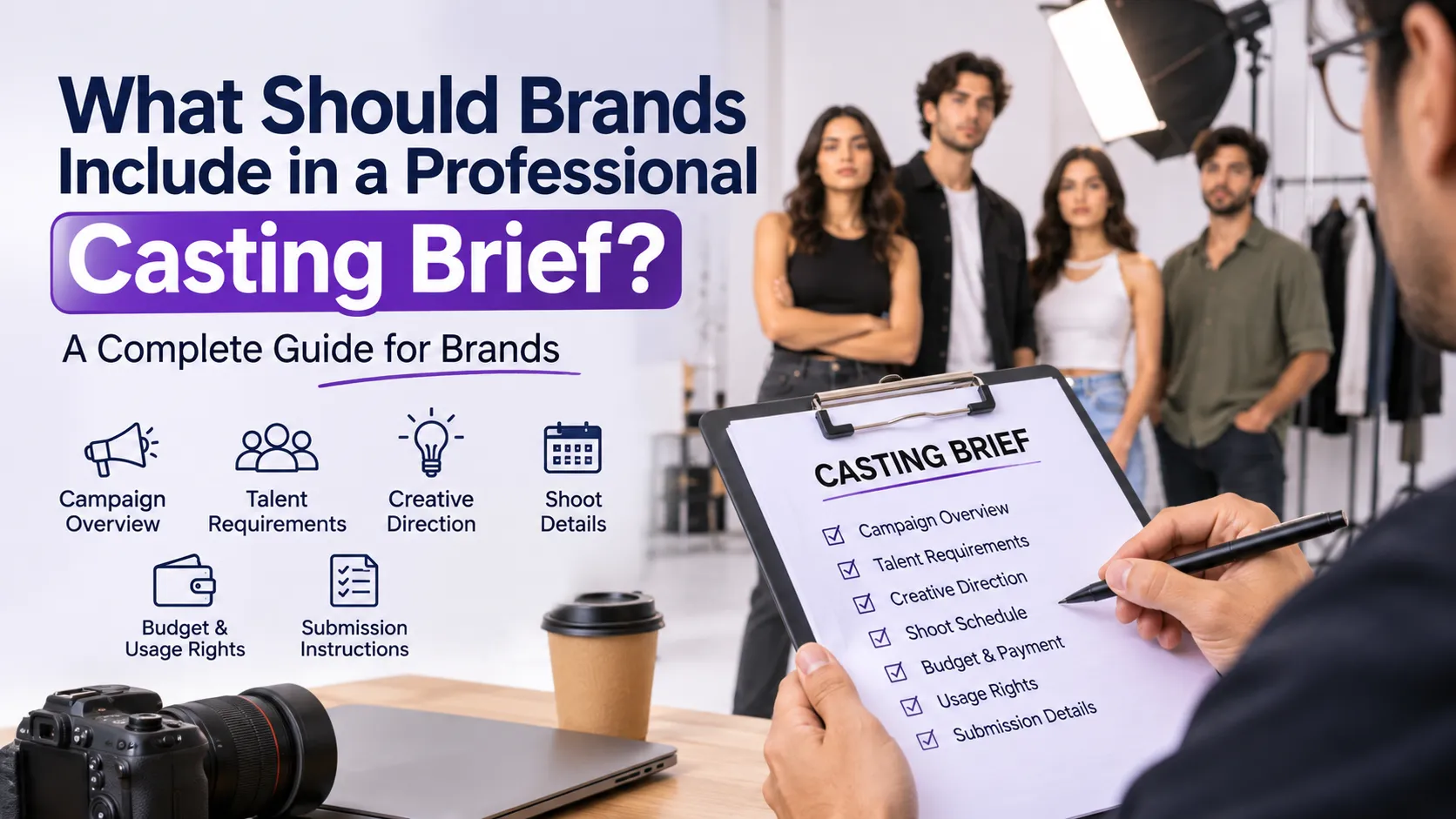
Finding the right talent for a brand campaign involves more than selecting someone who looks good on camera. Models, actors and content creators should represent the brand's identity, connect with its target audience and communicate the campaign's message effectively. This is why preparing a professional casting brief is an important step before starting the casting process.
A casting brief helps brands communicate their expectations to casting directors, talent agencies and production teams. It explains the campaign concept, required talent, creative direction, shoot details and commercial terms. Without clear instructions, brands may receive unsuitable profiles, experience unnecessary delays or face confusion during production.
Whether you are planning a fashion photoshoot, product advertisement, television commercial or social media campaign, a well-prepared casting brief helps everyone understand the project's requirements.
What Is a Professional Casting Brief?
A professional casting brief is a document that outlines the requirements of a brand's casting project. It provides casting professionals with the information needed to identify, shortlist and recommend suitable talent.
It generally includes the campaign objective, role descriptions, talent specifications, visual references, shoot schedule, compensation and usage rights.
A casting brief is different from a general brand brief. A brand brief focuses on the company's identity, marketing objectives and target audience, whereas a casting brief translates those objectives into specific talent and performance requirements.
For example, a skincare brand may need models who can demonstrate its products naturally and represent its target customers. The casting brief should explain the desired appearance, performance expectations, shoot arrangements and campaign usage.
Read More : - Top 31 Influencer Marketing Agencies in Mumbai (Updated September 2026)
10 Essential Elements Every Casting Brief Should Include
A casting brief does not need to be unnecessarily complicated. However, it should contain enough information for agencies and casting directors to understand exactly what the brand needs.
1. Campaign Overview and Brand Background
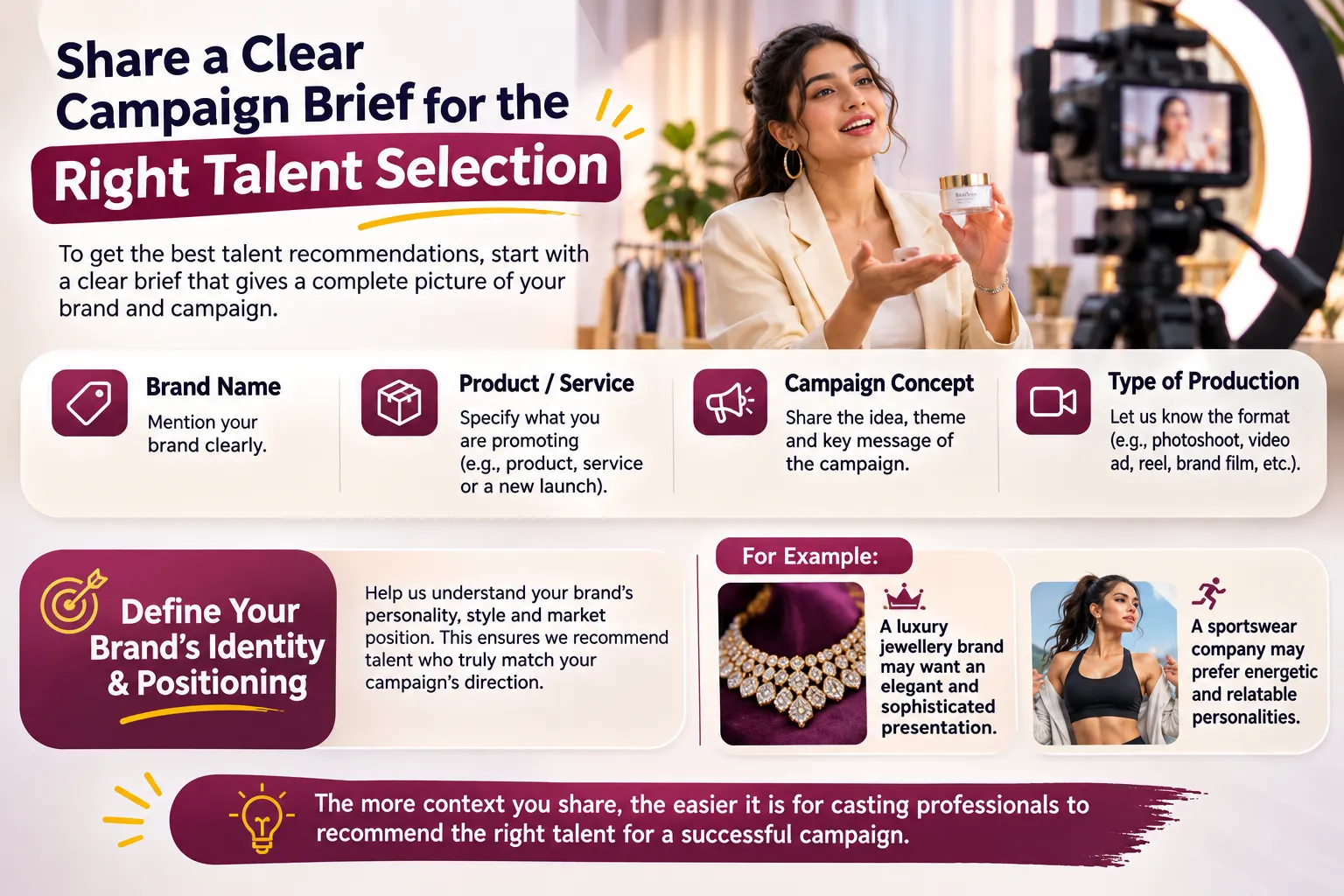
Start by introducing your brand and explaining the purpose of the campaign. Include the brand name, product or service, campaign concept and type of production.
Briefly explain your brand's identity and positioning. For example, a luxury jewellery brand may want an elegant and sophisticated presentation, while a sportswear company may prefer energetic and relatable personalities.
Providing this background helps casting professionals recommend talent who match the campaign's overall direction.
2. Campaign Objectives and Target Audience

Explain what the campaign aims to achieve. Is the brand launching a new product, increasing awareness, promoting a seasonal collection or reaching a different customer group?
Include the target audience, relevant age group, geographic market and primary campaign message.
For example, a campaign targeting young professionals may require a different talent profile from one promoting family-oriented products.
Understanding the audience helps casting teams identify people who can connect naturally with potential customers.
3. Role Descriptions and Talent Requirements
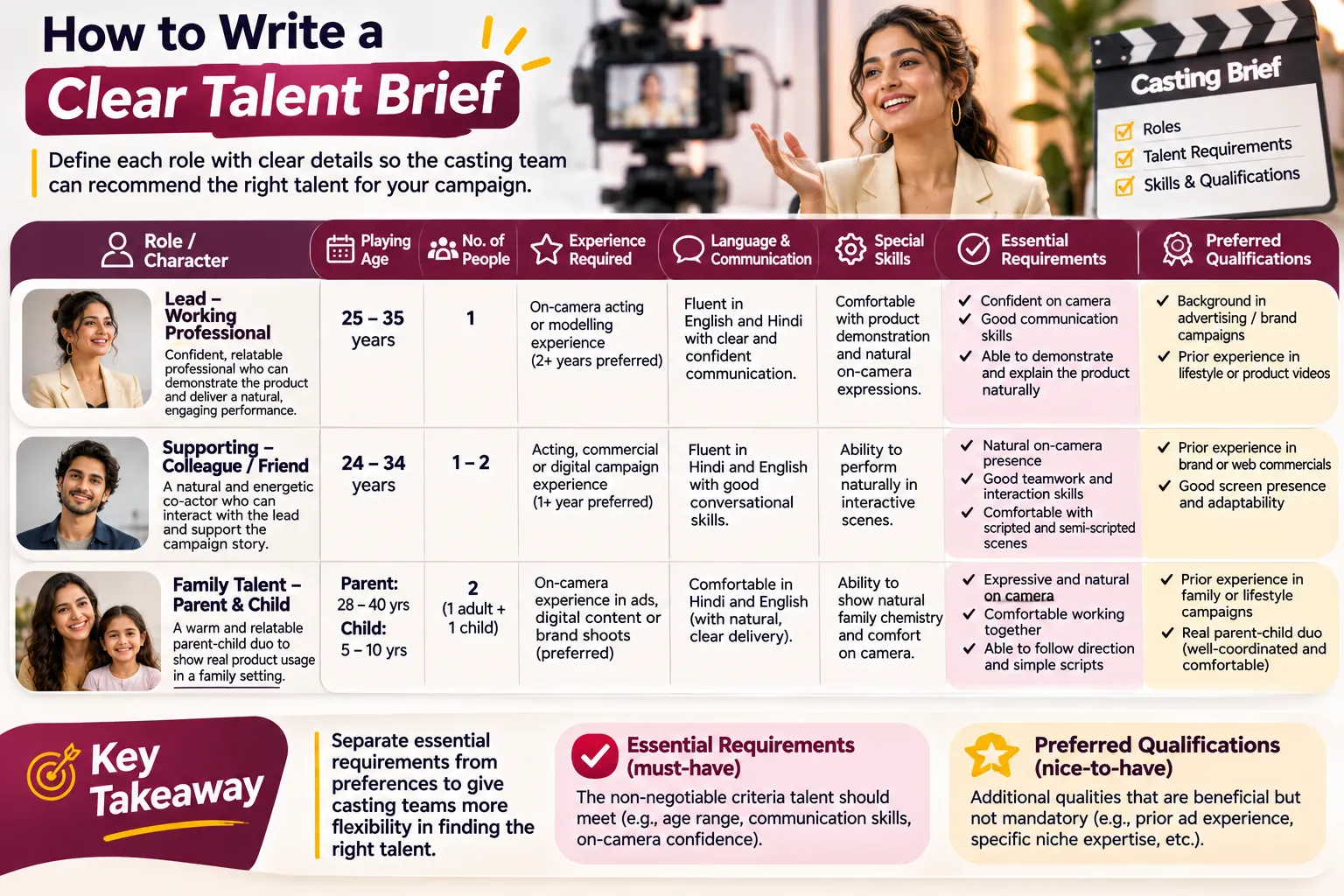
Clearly explain each role and the type of talent required. Avoid descriptions such as "male model needed" or "female actor required" without providing additional information.
Include:
- Role or character description.
- Playing age range, where relevant.
- Number of people required.
- Relevant modelling or acting experience.
- Language and communication skills.
- Special skills, if required.
- Essential and preferred qualifications.
For example, a brand may require a confident working professional who can demonstrate a product, interact naturally with other cast members and deliver comfortable on-camera expressions.
Separate essential requirements from preferences. This gives casting agencies flexibility to recommend suitable candidates without unnecessarily restricting the talent pool.
4. Creative Direction and Visual References
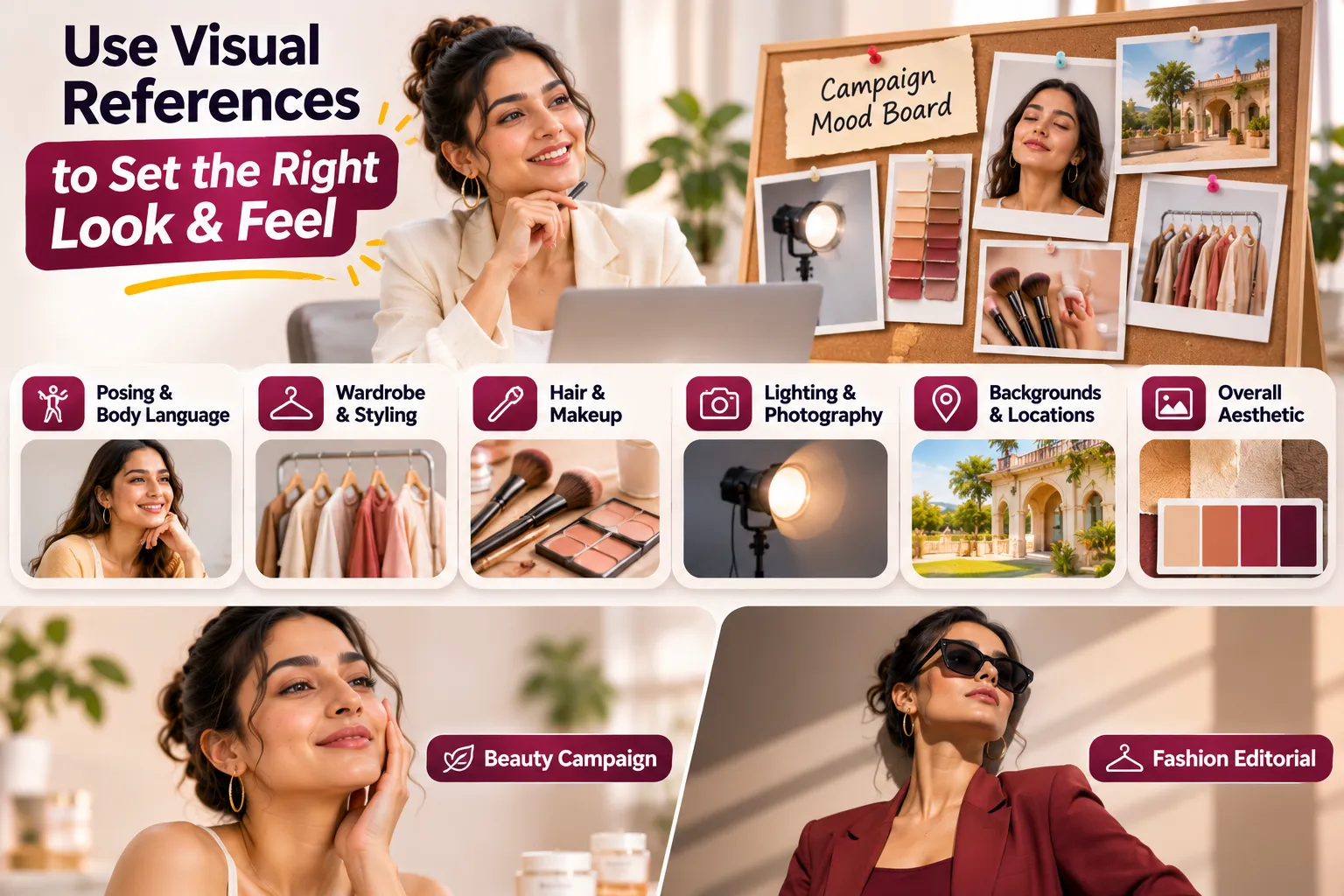
Visual references help communicate the campaign's intended appearance and atmosphere. Brands can share mood boards, sample photographs, videos or previous campaign references.
Consider including references for:
- Posing and body language.
- Wardrobe and styling.
- Hair and makeup.
- Lighting and photography.
- Backgrounds and locations.
- Overall campaign aesthetic.
For example, a beauty campaign may require natural expressions, minimal makeup and soft lighting, while a fashion editorial may involve dramatic poses and distinctive styling.
References should guide the creative direction rather than require talent to copy another person's appearance exactly.
Visit us : - AI-Generated Models vs Real Models: What Should Brands Choose?
5. Performance Expectations and Special Skills
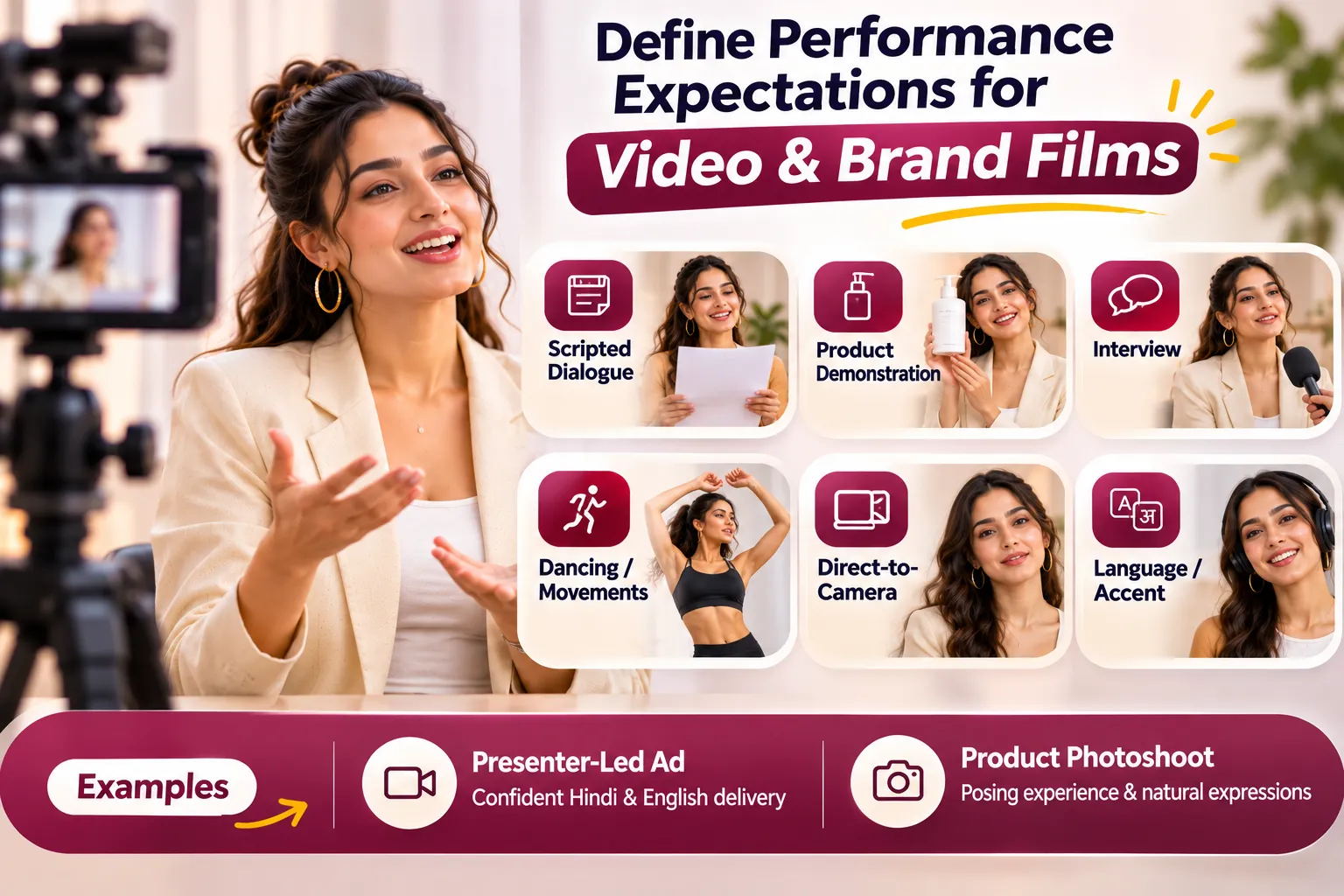
For video advertisements and brand films, brands should explain what the selected talent will be expected to perform.
Mention whether the role involves scripted dialogue, product demonstrations, interviews, dancing, specific movements or direct-to-camera communication.
If a particular language, accent or technical skill is necessary, specify the expected proficiency.
For example, a presenter-led commercial may require confident Hindi and English delivery, while a product photoshoot may primarily require posing experience and natural expressions.
Clear performance expectations help casting teams assess candidates against the actual requirements of the project.
6. Shoot Dates, Location and Production Schedule
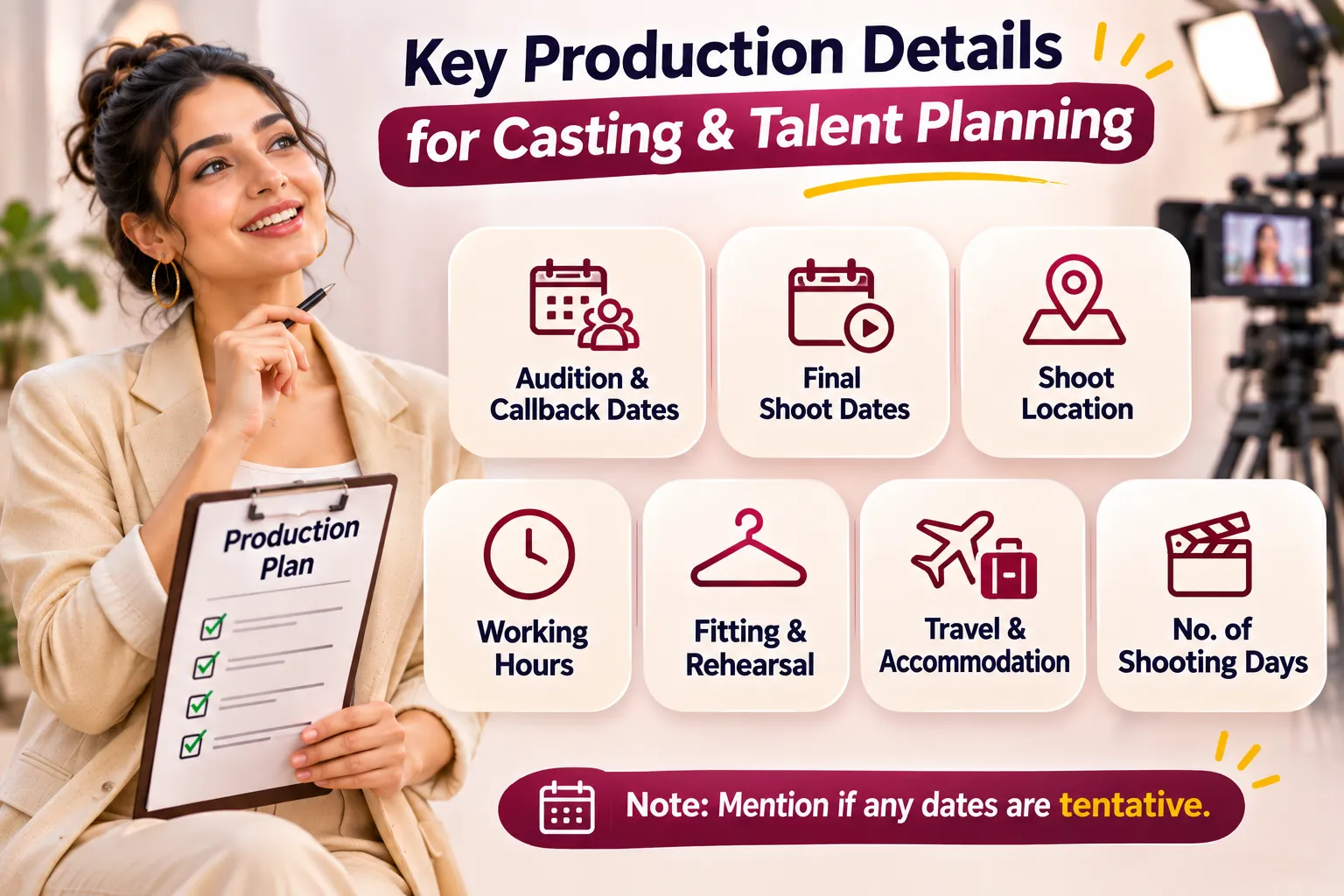
Production details are essential when checking talent availability and planning the casting process.
Include:
- Audition and callback dates.
- Final shoot dates.
- Shoot location.
- Expected working hours.
- Fitting and rehearsal requirements.
- Travel and accommodation arrangements.
- Number of shooting days.
If dates are not confirmed, clearly identify them as tentative.
Providing these details early helps agencies check availability and prevents scheduling complications later.
7. Wardrobe, Styling and Content Deliverables
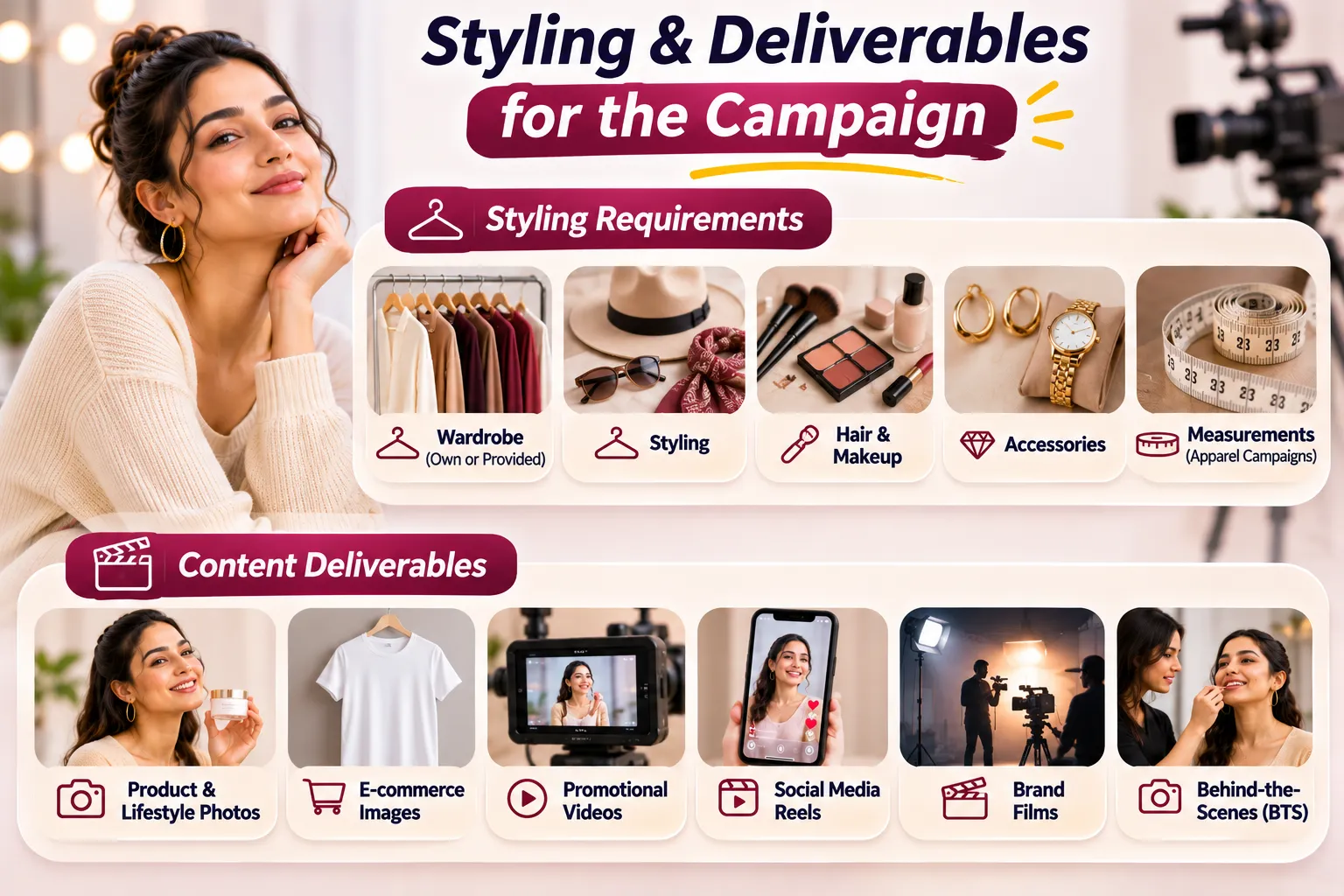
Explain whether talent will wear their own clothing or outfits supplied by the production team. Include relevant styling, footwear, accessories, hair and makeup requirements.
For apparel campaigns, clothing measurements may be necessary. Jewellery campaigns may require close-up product shots and specific hand styling.
Brands should also clarify the expected content deliverables, such as:
- Product and lifestyle photographs.
- E-commerce images.
- Promotional videos.
- Social media reels.
- Brand films.
- Behind-the-scenes content.
This helps talent understand the scope of participation and allows production teams to prepare appropriately.
8. Usage Rights, Territory and Exclusivity
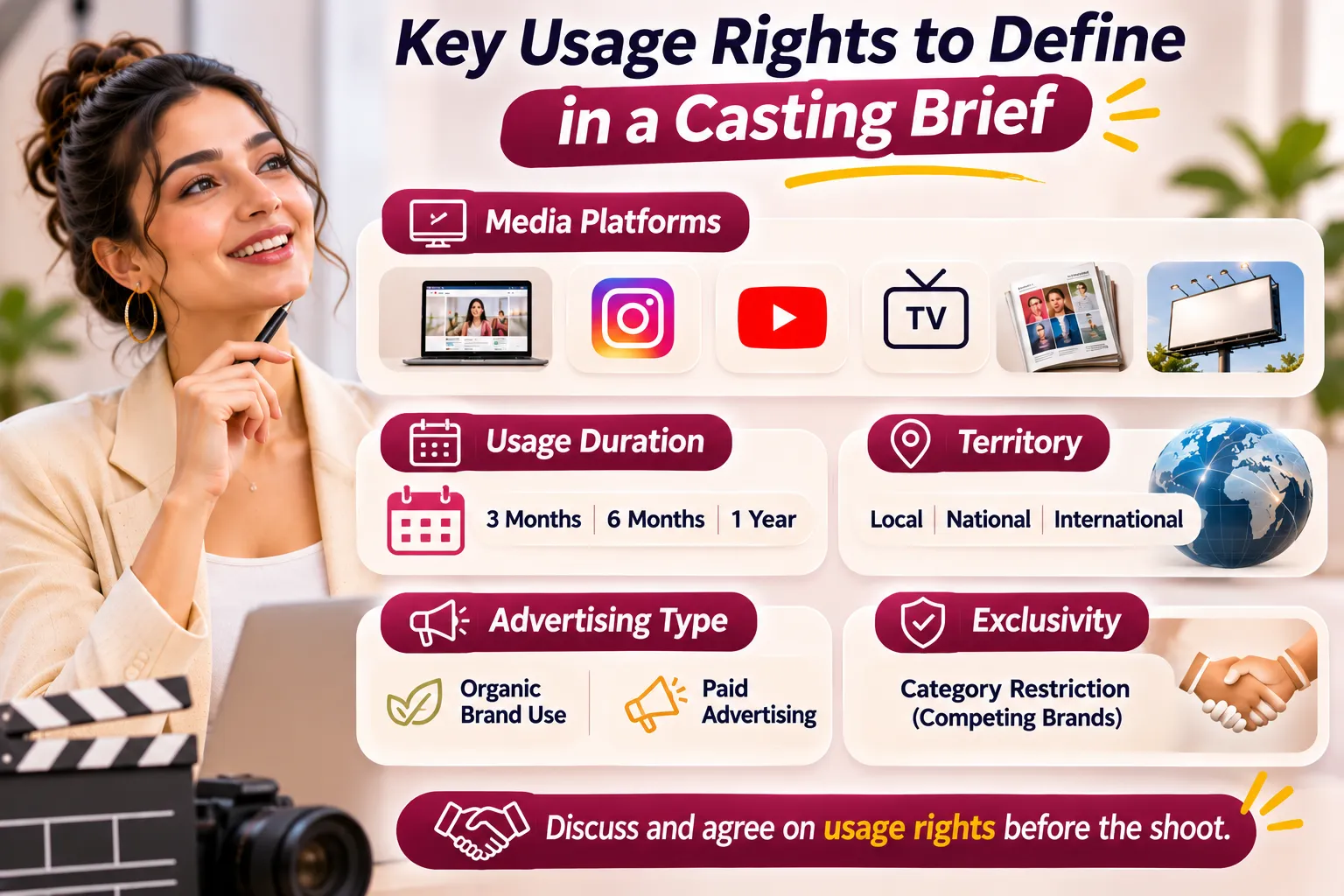
Usage rights are among the most important commercial details in a casting brief. They explain how and where the brand can use photographs and videos featuring the selected talent.
Brands should specify:
- Media platforms: Website, Instagram, YouTube, television, print or outdoor advertising.
- Usage duration: Three months, six months, one year or another agreed period.
- Territory: Local, national or international markets.
- Advertising type: Organic brand communication or paid advertising.
- Exclusivity: Whether talent will be restricted from working with competing brands within a particular category.
These details should be discussed and agreed upon before the shoot. Usage duration and exclusivity can affect talent compensation, so they should never be left unclear.
9. Talent Compensation and Additional Expenses
A professional casting brief should explain the proposed compensation and payment arrangements.
Include the talent fee or budget range, payment timeline, overtime terms, travel expenses, accommodation and other relevant allowances.
It is also useful to distinguish between the shoot fee and usage-related compensation. The shoot fee covers participation in production, while usage-related compensation concerns the agreed commercial use of the talent's image or performance.
Providing a realistic budget helps casting agencies recommend suitable candidates and makes commercial discussions more transparent.
10. Audition Instructions and Submission Deadline
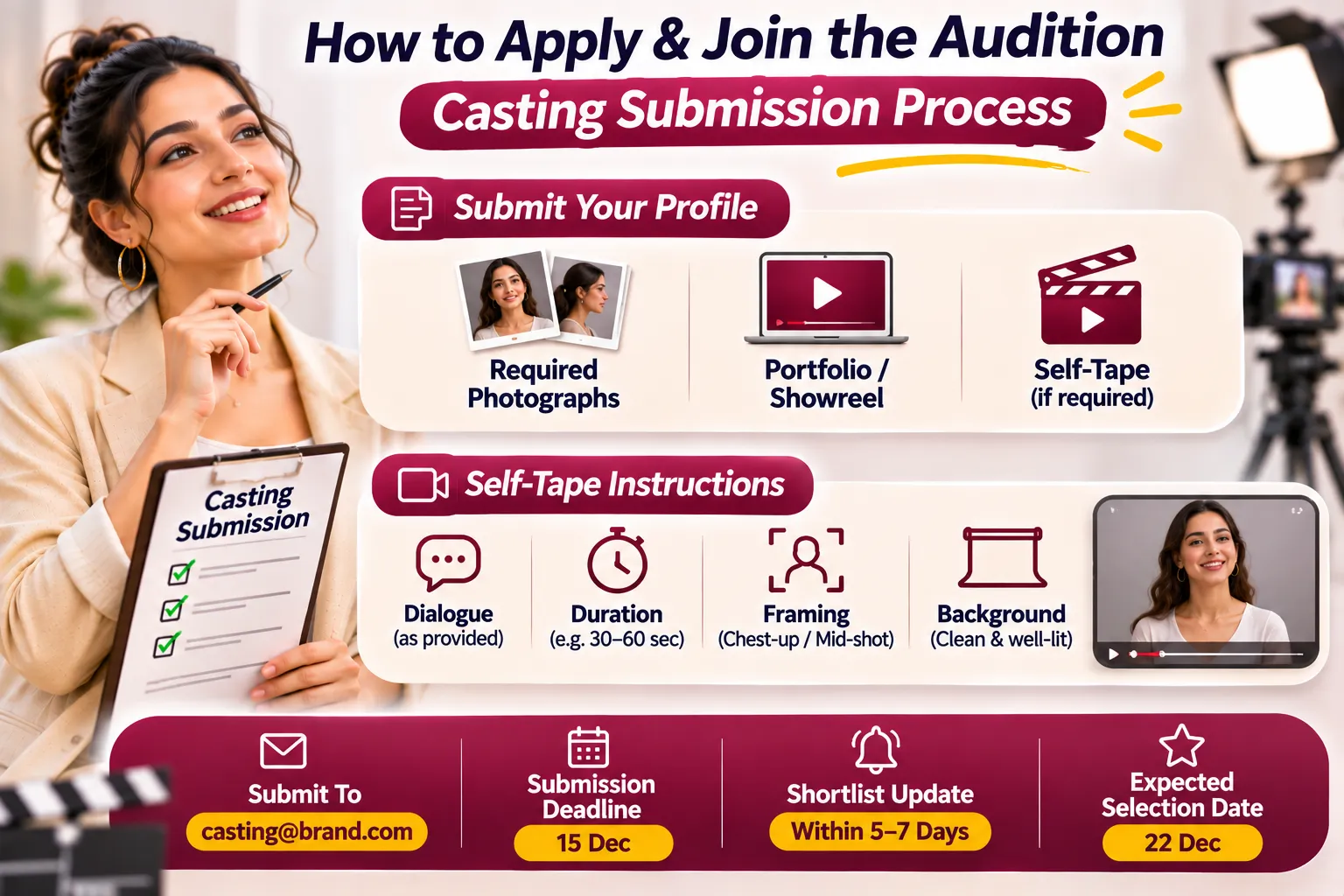
Finally, explain how interested talent should submit their profiles and participate in auditions.
Include the required photographs, portfolio or showreel, self-tape instructions, submission email, deadline and expected selection date.
If a self-tape is required, provide clear instructions about dialogue, video duration, framing and background.
Also mention when shortlisted candidates can expect an update. A clear submission process makes the casting experience more organised for everyone involved.
Common Casting Brief Mistakes Brands Should Avoid
Even a detailed casting brief can create confusion if important information is missing. Here are some common mistakes brands should avoid:
- Vague talent descriptions: Explain the actual role and performance expectations instead of using subjective descriptions.
- Missing campaign objectives: Make sure casting teams understand the purpose of the campaign.
- Unclear usage rights: Specify platforms, territory, duration and exclusivity before confirming talent.
- No budget information: Provide a realistic compensation range whenever possible.
- Missing visual references: Use mood boards and sample images to communicate creative expectations.
- Incomplete production details: Mention dates, location, working hours and travel arrangements.
- Unrealistic deadlines: Allow enough time for submissions, auditions, callbacks and final selection.
Brands should also avoid unnecessary restrictions that are unrelated to the role. Focus on genuine campaign requirements and consider a wider range of suitable talent.
Professional Casting Brief Template for Brands
Brands can use this simple structure when approaching a casting agency or director.
Project Information
- Brand and campaign name:
- Product or service:
- Campaign objective:
- Target audience:
- Type of production:
Talent Requirements
- Role description:
- Number of people required:
- Playing age range:
- Required experience and skills:
- Language requirements:
- Availability:
Creative Direction
- Campaign concept:
- Visual references:
- Wardrobe and styling:
- Hair and makeup:
Production Details
- Audition dates:
- Shoot dates:
- Location:
- Working hours:
- Rehearsal and fitting requirements:
Commercial Details
- Talent budget:
- Usage platforms:
- Usage duration:
- Territory:
- Exclusivity:
- Additional expenses:
Submission Instructions
- Required photographs and portfolio:
- Showreel or self-tape:
- Submission deadline:
- Contact details:
This template can be adapted for fashion, beauty, jewellery, e-commerce, lifestyle and commercial advertising campaigns.
How Does a Professional Casting Brief Improve the Casting Process?
A well-prepared casting brief benefits brands, agencies and talent alike.
- Better talent recommendations: Clear requirements help casting professionals identify candidates who match the campaign.
- Less communication: Sharing important details upfront reduces repeated questions and unnecessary revisions.
- Organised auditions: Specific audition instructions make candidate evaluation more consistent.
- Better budget planning: Clear compensation and usage terms help avoid commercial misunderstandings.
- Smoother production: When talent understands expectations before arriving on set, the production team can focus on delivering the campaign.
Ultimately, a professional casting brief creates a shared understanding between everyone involved.
Read More :- How to Choose the Right Celebrity Management Agency in Mumbai
Final Thoughts
A professional casting brief is an important foundation for any successful brand campaign involving models, actors or other creative talent. It connects the brand's creative vision with the people responsible for bringing that vision to life.
From defining campaign objectives and describing roles to explaining production schedules, usage rights and compensation, every detail should help casting professionals understand the project.
Brands do not need complicated documents to achieve this. They need clear instructions, realistic expectations and a well-defined understanding of the talent they want to hire.
Taking the time to prepare a detailed casting brief can make the selection process more focused, organised and efficient.